Afro-Caribbean Puerto Viejo
Afro-Caribbean Puerto Viejo: A Culture Guide
Puerto Viejo de Talamanca is one of the centers of Afro-Caribbean culture in Costa Rica. Many families descend from Jamaican and other West Indian workers who came from the 1870s to build the Atlantic railway, and the town’s food, calypso music and Limonese Creole (Mekatelyu) reflect that heritage.
History
How did Afro-Caribbean people come to Puerto Viejo?
First by sea, then by rail. By 1828 the family of William Smith had settled at today’s Punta Cahuita. According to SINAC, Costa Rica’s national parks agency, the reef was fished by Black and Indigenous turtle fishers who sailed from Bocas del Toro and the Nicaraguan coast. Early settlers grew yam, cassava, cacao and coconut.
In 1872 the first organized group of Jamaican workers arrived to build the Atlantic railway from San José to Limón, completed in 1890. Workers also came from Barbados and St. Kitts. The work was deadly: one widely cited account puts the toll at up to 4,000 lives on the first 25 miles alone, mostly from malaria.
Minor C. Keith, who ran the railway project, began growing bananas to help pay for it. In 1899 his business merged with Boston Fruit to form the United Fruit Company. West Indian workers and their families became the backbone of the Caribbean banana economy, and they organized strikes, including in Sixaola in 1913 and 1918.
Puerto Viejo’s old English name was Old Harbour. In Limonese Creole it becomes “Wolaba”, now the name of the town’s heritage parade.
What changed in 1949?
Citizenship. Many West Indian families were long treated as foreigners, as British subjects, and faced open discrimination. In 1934, Law No. 31, which approved a Pacific-coast banana contract, prohibited employing “people of color” on those plantations.
Although no written law has been found, Afro-Caribbean Costa Ricans long faced unwritten barriers to moving inland, alongside formal discrimination such as the 1934 ban.
On November 4, 1949, after the civil war, Decree-Law No. 836 repealed the 1934 ban, and a law against racial discrimination and in favor of free movement followed. As a University of Costa Rica historian writes, only in 1949 was Costa Rican citizenship recognized for this population. That same year, on October 12, Limón held its first Carnival.
Key dates
- 1828
Turtle fishers settle Cahuita
The family of William Smith settles at today’s Punta Cahuita, among Black and Indigenous turtle fishers from Bocas del Toro and the Nicaraguan coast.
- 1872
Railway workers arrive
The first organized group of Jamaican workers arrives to build the Atlantic railway.
- 1890
The railway is finished
The San José–Limón line is completed.
- 1899
United Fruit is born
Minor C. Keith’s banana business merges with Boston Fruit.
- 1910–11
Marcus Garvey in Limón
Garvey works as a plantation timekeeper and launches the bilingual newspaper Nation / La Nación.
- 1922
Liberty Hall opens
The UNIA hall opens in Limón. Branches follow, including in Cahuita and Puerto Viejo.
- 1934
A ban written into law
Law No. 31 prohibits employing Black workers on the Pacific banana plantations.
- 1949
Repeal and recognition
Decree-Law No. 836 repeals the 1934 ban, citizenship is recognized, and Limón holds its first Carnival.
- 1980
Día del Negro
An executive decree creates the day.
- 2011
Law 8938
August 31 becomes the Day of the Black Person and Afro-Costa Rican Culture.
- 2012
Calypso honored
Calypso limonense is declared national intangible cultural heritage.
- 2013
The first Wolaba Parade
Puerto Viejo’s community heritage parade takes to the streets.
- 2018
A month and a song
August becomes the Historic Month of Afro-descendance (Law 9526), and May 7 National Calypso Day (Law 9612).
- 2021
A national holiday
Law 10050 makes August 31 a national holiday.
- 2022
Grand Gala Parade
Limón’s August 31 parade is declared intangible cultural heritage of Costa Rica.
- 2023
Farewell to Walter Ferguson
The calypso legend dies in Cahuita, aged 103.
Who was Marcus Garvey to Limón?
Marcus Garvey, the Jamaican-born founder of the Universal Negro Improvement Association (UNIA), came to Costa Rica in 1910 and worked as a timekeeper on a United Fruit banana plantation in Limón province. In spring 1911 he launched a bilingual newspaper there, Nation / La Nación, which criticized the company.
Garvey founded the UNIA in Jamaica in 1914. In 1922 its Liberty Hall opened in Limón, and some two dozen branches followed, including in Cahuita and Puerto Viejo. The Limón building, known as the Black Star Line, was designated an architectural landmark in 2000; a fire in April 2016 destroyed about 75% of it.
In Puerto Viejo, the Casa de la Cultura Marcus Garvey carries his name. Ask locally about its current activities before you go.
What is Día del Negro?
August 31 is the Día de la Persona Negra y la Cultura Afrocostarricense, the Day of the Black Person and Afro-Costa Rican Culture. Many people still use its older name, Día del Negro.
The date comes from the UNIA’s 1920 Declaration of Rights of the Negro Peoples of the World, which proclaimed August 31 an international holiday. Costa Rica first recognized the day by executive decree in 1980. Law 8938 (2011) placed it in the school calendar, Law 9526 (2018) made August the Historic Month of Afro-descendance, and Law 10050 (2021) made August 31 a national holiday.
In Limón city, the Grand Gala Parade fills the streets with dance, calypso, floats and traditional dress; it was declared intangible cultural heritage of Costa Rica in 2022. In Puerto Viejo, the community’s own Wolaba Parade has taken over the main street in late August since 2013. Its 12th edition was held on August 29, 2026.
What is calypso limonense?
Calypso has been heard on this coast since 1870, when it arrived with migrants from Jamaica, Barbados and St. Kitts. Its singers, the calipsonians, are the coast’s storytellers.
In 2012 Costa Rica declared calypso limonense an outstanding expression of Afro-descendant intangible cultural heritage (Executive Decree 37418-C).
National Calypso Day, May 7, is the birthday of Walter “Gavitt” Ferguson, born in 1919 in Guabito, Panama. For decades he sold homemade cassettes of his songs out of a cardboard box, and those tapes traveled the world. He died in Cahuita in February 2023, aged 103.
What language is spoken in Puerto Viejo?
Spanish is Costa Rica’s official language. Many Afro-Caribbean families also speak Limonese Creole, also called Limón Creole English and known locally as Mekatelyu, from “make I tell you”. It grew from the Jamaican Creole of the railway and banana workers; a 1986 estimate counted about 55,000 speakers.
One word you’ll hear: Wolaba, Creole for Old Harbour, Puerto Viejo’s old English name. We don’t put made-up Creole phrases in our copy. If you’d like to learn some, ask the people who speak it.
Food
What should you eat?
Coconut milk, thyme and hot pepper give the Caribbean kitchen its own voice. A few dishes to look for:
Rice and beans
Rice cooked with red beans, coconut milk, thyme and Panamanian peppers. Not to be confused with the national gallo pinto.
Rondón
From “run down”: whatever the cook can run down, stewed in coconut cream with seafood, root vegetables, plantain and breadfruit.
Patí
A turnover of spiced meat with hot pepper, sold as street food in coastal towns.
Pan bon
A dark, spiced sweet bread, named after the English “bun”, with the color of molasses and pieces of dried fruit. It arrived with Jamaican migrants.
Plantintá
“Plantain tart”: a sweet plantain pastry.
Agua de sapo
“Toad water”: an iced drink of tapa de dulce (raw cane sugar), fresh ginger and lime, a Limón classic.
Where to try it
Look for local sodas and home cooks in Puerto Viejo, Cahuita and Limón. Our team’s favorite places to eat are in the guide.
Learn more
Indigenous neighbors
Who are the Bribri and Cabécar peoples?
Costa Rica has 8 Indigenous peoples living in 24 Indigenous territories. The Bribri and Cabécar peoples of Talamanca speak Chibchan languages and are among Conga’s nearest neighbors.
Këköldi, a Bribri–Cabécar territory, lies in the hills directly behind Puerto Viejo and Cocles. Since 1994 it has been run by the Wak Ka Köneke association, whose name means “caretakers of the land of Këköldi”; it runs an iguana breeding project and an observation tower. Farther inland lies the Talamanca Bribri territory, with communities such as Shiroles, Suretka and Amubri.
In Bribri tradition, Sibö is the creator, and a child’s clan comes from the mother. Cacao, tsiru, is sacred: Sibö chose Tsiru as his wife, and only women prepare the sacred cacao drink, which accompanies births, first menstruation, marriages and burials.
The Bribri ceremonial conical house, the Ù-sulë́, is thatched with woven suita palm and built from 16 plant species. Few remain; recent builds are part of a cultural revival.
Plan
Where to experience the culture
Dates and places with sources you can check. Confirm times locally before you go.
Wolaba Parade · Puerto Viejo
Late August. The community’s own heritage parade on the main street, held since 2013.
Grand Gala Parade · Limón
August 31. Dance, calypso and floats, declared national intangible heritage in 2022. Limón is about 61 km north of Conga by road.
Limón Carnival · Limón
The days around October 12. Celebrated every year since 1949, founded by Alfred King.
National Calypso Day · Cahuita
May 7, Walter Ferguson’s birthday, marked nationwide. Cahuita was his hometown.
A historic walk in Limón
Parque Vargas (1905), the Baptist Missionary House and Big Boy Stadium, both heritage-listed in 2002.
Cacao and community visits
Arrange visits to Indigenous communities in advance, through community groups such as Stibrawpa in Yorkín, or ask our team about our indigenous cacao tour.
Learn more
How to visit respectfully
- Visit Indigenous communities by arrangement. Këköldi asks that visits be arranged in advance, and at the women-led Stibrawpa association in Yorkín, only women make the chocolate, following tradition.
- Ask before you photograph people. Treat ceremonies as ceremonies, not shows.
- Buy crafts directly from the artisans or community associations that make them, and ask who made each piece.
- Use people’s own words: Afro-Costa Rican, Afro-Limonense, Bribri, Cabécar. Avoid “tribe” and “exotic”.
- Eat at local sodas and hire local guides, so your money stays in the community.
At Conga
How is this culture present at Conga?
With care, and with credit where it’s due. Conga is an Afro-Caribbean-inspired hotel, not a cultural institution, so we point you beyond our gate to the people who keep this culture alive.
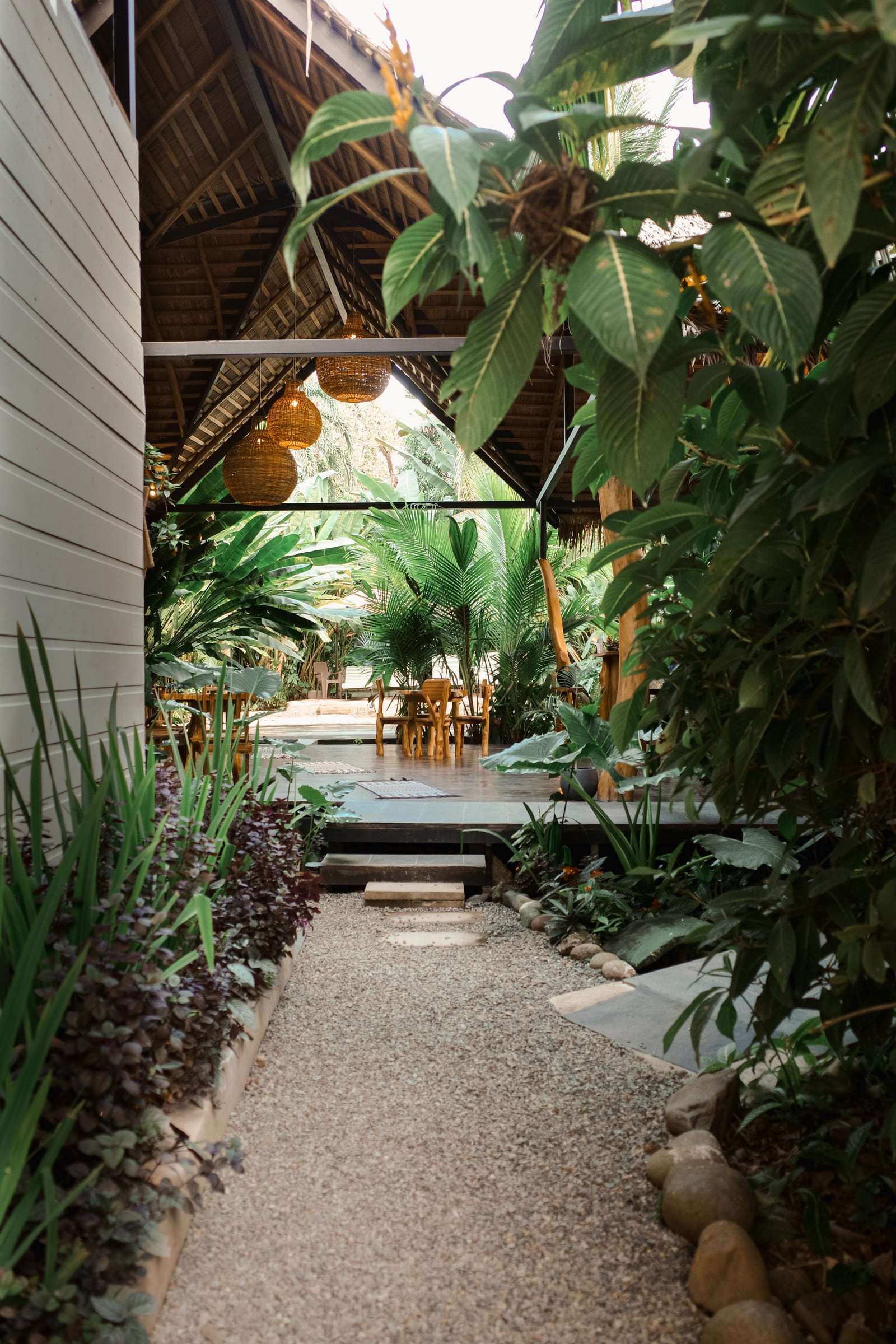
The artwork at reception celebrates El Día del Negro. Our palm-thatch roofs were made with indigenous communities of Talamanca, and the masks in the rooms were hand-carved by Indigenous Costa Rican artisans. Read our story.
Keep reading
Visiting as a Black traveler
Our heritage guide to Costa Rica’s Caribbean coast: history, where the culture lives today and practical notes.
Learn moreThe Conga story
The concept behind the hotel, the craft in its rooms and the remodel.
Learn moreWhere to eat in Puerto Viejo
Our team’s favorite places, from Caribbean cooking to coffee.
Learn more
Culture questions
What is Día del Negro?
Día del Negro is the older, colloquial name for August 31, officially the Day of the Black Person and Afro-Costa Rican Culture (Law 8938, 2011). The date comes from the UNIA’s 1920 declaration. Since Law 10050 (2021) it has been a national holiday, and August is Costa Rica’s Historic Month of Afro-descendance. Limón celebrates with the Grand Gala Parade; Puerto Viejo holds its Wolaba Parade in late August.
What language is spoken in Puerto Viejo?
Spanish, Costa Rica’s official language. Many Afro-Caribbean families also speak Limonese Creole, known locally as Mekatelyu, from “make I tell you”. It grew from the Jamaican Creole brought by railway and banana workers from 1872 onward; a 1986 estimate counted about 55,000 speakers. Bribri and Cabécar, Chibchan languages, are spoken in the Indigenous territories of Talamanca.
Sources
- SINAC, Parque Nacional Cahuita: history and cultural heritage
- Rosario Fernández, R. C. (2008), “Las identidades de la población de origen jamaiquino en el Caribe costarricense, 1872-1950”, Diálogos (UCR)
- Wikipedia, Minor Cooper Keith
- JSTOR Daily, “Marcus Garvey’s Journey Began in Central America”
- Wikipedia, Marcus Garvey
- UNIA-ACL, Declaration of Rights of the Negro Peoples of the World (1920)
- The Tico Times (May 2, 2016), fire and the future of the Black Star Line building
- Ministerio de Educación Pública, Día de la Persona Negra y la Cultura Afrocostarricense
- Ministerio de Educación Pública, Ley N.° 9526 (Mes Histórico de la Afrodescendencia)
- Ministerio de Trabajo y Seguridad Social (Aug 25, 2022), August 31 national holiday
- Universidad de Costa Rica (Aug 31, 2023), “El Grand Gala Parade”
- Archivo Nacional de Costa Rica, Carnavales de Limón (October 2021)
- Sistema de Información Cultural (MCJ), Historia del Calypso Limonense
- Ministerio de Educación Pública, Día Nacional del Calipso Limonense
- The Tico Times (Feb 26, 2023), Walter Ferguson dies at 103
- Wikipedia, Limonese Creole
- Visit Costa Rica (ICT), Historical walks through Limón
- The Tico Times (Feb 20, 2022), “Caribbean cuisine: a fusion of flavors, cultures”
- The Tico Times (Dec 2, 2018), agua de sapo
- Wikipedia (es), Pan bon
- INEC, Censo 2011: Territorios Indígenas
- The Tico Times (Sep 5, 2021), “The Bribri Indigenous Culture of Costa Rica”
- Wikipedia, Sibú
- Wikipedia, Talamanca Bribri territory
- UNED–CICDE, “Rescatando nuestra tradición a través del cacao”
- Pozo-García, Morales & García Segura (2020), “Etnobotánica del Ù-sulë́”, UNED Research Journal
- The Tico Times (Oct 13, 2006), Këköldi Wak Ka Köneke
- Cultural Survival (Feb 17, 2012), “Bribri Women Lead the Way in Community-Based Tourism”
- The Tico Times (Aug 28, 2026), Puerto Viejo Wolaba Parade 2026
Plan your days on the coast
Tell us what you’d like to see and our team will help you arrange tours and transport.